Hybrid vs Remote Jobs vs Freelancing: Which One Is best in 2026?
Who would have thought people would love to do online jobs? The workplace has changed over the past few years. Office jobs still exist, but a huge number of people have switched to Hybrid, freelance, or Remote work. Each work model comes with its own challenges, advantages, and disadvantages. However, it is up to you to decide which one meets your career goals in 2026.
The workload might be the same, but working from the comfort of your home has surely created magic. I have seen people uncertain about which one to prefer, so I decided to cover the topic comprehensively.

Hybrid vs Remote Jobs vs Freelancing: A Detailed Comparison
| Features | Hybrid Jobs | Remote Jobs | Freelancing |
| Income | Fixed | Mostly, income is fixed, but if you have a freelance remote job, it can be variable. | Variable Income |
| Independence | Low | Medium | High |
| Income Potential | Medium | Medium to High | Very High |
| Career Growth | High | Medium to High | A skilled freelancer has a bright future |
| Social Interaction | High | Medium | Low |
| Career Flexibility | Medium | High | Very High |
| Job Security | High | High | Low |
Hybrid vs Remote Jobs vs Freelancing: A Detailed Guide
Every work model has its pros and drawbacks. With a detailed comparison, one might be able to make an informed decision. This guide will comprehensively cover each work model, including its pros and cons. Besides, with 1 decade of experience, I will share my verdict.
What is a Hybrid Job?
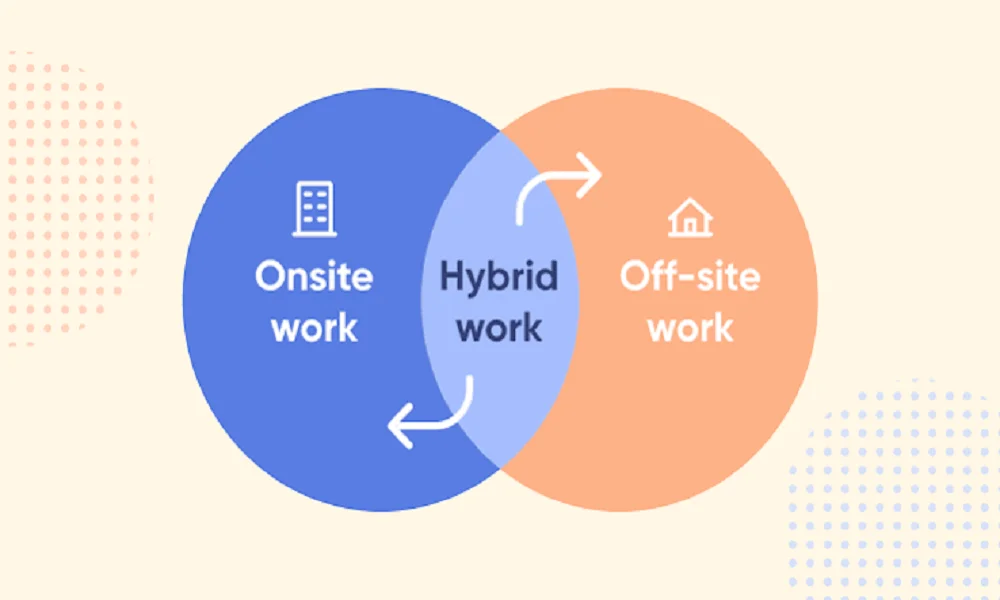
Hybrid jobs are a combination of remote and office work, with the work split between home and the office. An employee is given the opportunity to work independently from home and with the team in the office on designated days.
The trend of working in a hybrid model became mainstream in 2020 during the pandemic, as stated on one of the sites, when many people were forced to work from home. The implementation solely depends on the organization you are working for.
Hybrid Work Benefits:
- Flexible Workplace Structure: The freedom to choose is the biggest advantage of hybrid jobs. A few days are reserved for office meetings, while you can be in your comfort zone on other days, where you get the opportunity to work off-site.
- Balanced Lifestyle: Shorter commuting times and the ability to split the workplace help employees maintain a balanced lifestyle. It minimizes stress and lets people work in peace.
- Use of Digital Tools: Because they work off-site some days each week, employees contact the team via various digital tools, including Zoom, Slack, Google Workspace, and others.
- Fixed Salary: Whether you work on-site or off-site, you won’t be charged less or extra. The salary is fixed. However, there might be some bonuses for extra work.
- Employee Satisfaction: The rise in hybrid jobs is mainly due to increased satisfaction levels. Many professionals prioritize it.
- Improved Productivity: Instead of focusing on the number of hours an employee works, the employer focuses solely on how efficiently a person performs. It enhances the productivity level.
- Vast Hiring Opportunities: It doesn’t matter in which city you are, be it London, Manchester, or Birmingham, you can still get the chance to work.
Disadvantages of Hybrid Jobs
- Ultimate dependence on technology is the primary downside of a hybrid work model.
- The communication gap might be a barrier if the team staff is not cooperative.
- The management staff should be action-oriented because overseeing company culture and tracking off-site performance are tough assignments.
- On-site staff get more work opportunities than off-site staff.
What are Remote Jobs?
The jobs that don’t make you office-bound are Remote jobs that can be performed from anywhere in the world. It is more convenient for housewives and mothers with toddlers because no on-site interaction is needed here. It is the best work model.
Remote Job Benefits:
- Cost Saving: It cuts down on the cost of transportation, clothes, and food. Work with global leading companies without worrying about how you look.
- Diverse Career Options: From remote admin jobs to working as a graphic designer, you find many employment options beyond geographical boundaries. It opens the door to collaboration with leading multinational companies worldwide.
- Best Part-time Earning: You could look into part-time Remote jobs as a student, housewife, or mother. Those who want passive income to cover living expenses can choose this work model on weekends.
- Digital Communication: The communication is done on digital tools, including Skype, Slack, etc., because there are no on-site interactions.
- Work in a Positive Environment: You work in your safe space without anyone’s interruption, which brings the best out of you.
- Flexible Working Hours: Many Remote jobs let you work at a time that aligns with your preferences. Hence, you are never in a hurry to be on time. However, a few companies might give you deadlines.
Disadvantages of Remote Jobs
- If working remotely is your only source of income, there won’t be any social interaction.
- Being only digitally connected leads to many misunderstandings. In-person conversations can handle such issues well.
- If you live in a big family, home distractions might affect your work.
- Remote employees should make extra efforts to stay visible for work.
- No team bonding.
What is Freelancing?
Freelancing is the opposite of Remote jobs, as clients provide services on a contract basis without being fully dependent on a single company. Here, the employee can demand their own salary and say no straightaway or leave the project in the middle if unsatisfied.
The most commonly used platforms for freelancers include Fiverr, Upwork, LinkedIn, and Freelancer.com. You also have the privilege of earning on an hourly basis. To become a freelancer, list your skills on the platforms mentioned after creating a profile. Don’t forget to set the rates.
Freelancing Key Features:
- Self-Employment: A freelancer doesn’t need to be associated with the same company for years. They enjoy the freedom of being self-employed. Carry out tasks and join another company for better projects and payroll.
- Better Earning Chances: The more skilled you are, the greater your earning potential. You can secure a position in any company whenever you want without worrying about leaving your previous client. Financial freedom is the biggest treasure in freelance work.
- Vast Career Options: All content writers, web designers, SEO specialists, and copywriters: if you are unhappy with your current on-site job, switch to freelancing on the side, pick satisfied projects, and you will be relieved.
- Gain Maximum Experience: By working for many clients, they gain extensive experience that helps them refine their abilities.
- Earn on an hourly basis: Freelancing jobs help you earn on an hourly basis as per the project’s demand.
- No Job Security: You get paid on a per-project basis. If there is no project, you will not be paid. Hence, no security is mandated.
Disadvantages of Freelance Work
- Unpredictable earnings can be a worrying sign because you sometimes don’t get the next project right away.
- A few clients run away once their work is done, and there is nothing you can do.
- No extra bonuses or leaves are allotted. There is a deadline for completing the work on a specific date.
- Lack of social contact
- After every project completion, you are on the hunt for new clients.

Hybrid vs Remote Jobs vs Freelancing: Which one to Choose in 2026
You cannot exclude any of the above. Each one has its own advantages that make it worth considering. However, to clarify, let’s summarize it further.
1- Choose Remote Career If:
- If you want to be connected with multinational companies and want global exposure.
- If you are comfortable in isolation and require no social interaction.
- You can comfortably balance work life.
- If flexibility is your priority.
- You are seeking a side income.
2- Choose Hybrid Jobs If:
- If you value in-person interaction.
- You want to be more productive.
- If career development is your main preference.
- You want a stable and structured work routine.
3- Choose Freelancing If:
- You want to be fully independent.
- You are skilled enough to get projects in succession.
- If you are not looking for work flexibility.
- You are looking for better earning opportunities.
Frequently Asked Questions
Is freelancing better than a Remote job?
It depends on your preferences. Both work models suit different goals, so choosing any 1 isn’t right. Remote jobs are better for consistent income and stability, while freelancing is a good option for freedom and higher income potential.
Which work model pays more?
A skilled freelancer with multiple clients can easily earn up to £ 1,000 per month. Then come remote jobs, where there is a lot of potential to earn well and enjoy the highest income stability. Lastly, Hybrid jobs can also help you earn a good income with good income stability.
Are Remote jobs in 2026 still relevant?
Many industries where work can be done from home still prefer remote jobs, including IT sectors, Content writing, Cybersecurity, Online teaching, etc.
Which Industries prefer Hybrid work?
Information Technology, Accounting, Consulting, Digital Marketing, Human Resources, etc.
My Verdict
Do you know that, in the coming years, companies will convert remote and hybrid Jobs?
AI has created many possibilities, so freelancers who adapt to AI tools will surely enjoy many work opportunities. Hence, in the debate between Hybrid vs Remote Jobs vs Freelancing, only a work model that suits you well is a winner.
I have worked as a freelancer and have also opted for a remote job. The freedom and earning potential I enjoyed in freelancing work are surely unmatched. If you are skilled enough to be the next big thing in the freelancing world, it is the best choice.
Similarly, if you’re looking for a balanced work-life and want security, go with hybrid jobs. The choice is yours.