
How to start freelance content writing in the UK?
Are you interested in research and writing and now looking for ways to begin your career as a freelance writer? I have got you covered. It’s one of the best side hustles for earning a good income. Websites, agencies, digital marketing companies, and publications want fresh, engaging content to attract customers and strengthen their online presence.
It creates an opportunity for people who enjoy writing and can convey ideas beautifully. This guide will cover:
- Importance of freelance content writing
- How to start
- My personal experience
- How much you can earn
- Mistakes to avoid
Whether you are a student, a stay-at-home mum, a full-time employee, or someone looking for additional income, you can make the most of this guide. Let’s get started.

What is Freelance Content Writing?
Freelance content writing means writing useful, engaging content for clients, businesses, agencies, or online platforms without being tied to one company. Unlike traditional employees, a freelance content writer can work for multiple clients at a time without leaving their comfort zone. Depending on your skills and interests, you can write:
- Website content
- Blog posts and articles
- Social media captions
- Product descriptions
- Email newsletter
- Guestposts
- Business description
Why Choose Freelance Content Writing in the UK?
As a traditional employee, you must be wondering why you should choose freelance writing over working in a professional environment. Here are a few reasons freelancing is worth trying.
1- It Brings Flexibility
Flexibility is one of the biggest reasons why people should consider choosing freelancing at least once in a while. The freedom to work from anywhere is a pleasant experience. You won’t have to follow traditional 9-to-5 office hours, making it an attractive job for students, mums at home, and people looking for side income.
2- It Reduces Costs
Working from home lets you spend less on clothing and daily meals. You can save on commuting and avoid daily travel. This cost-effectiveness also makes it an attractive option for many people.
3- Multiple Earning Streams
You are not limited to earning from a single company because you are office-bound. Working online lets you provide writing services to as many clients as you manage. You can also offer different services to different clients, including blog writing, product descriptions, email writing, etc.
4- It Brings Opportunities
Why work for a single company long term when you can turn it into a full-time business with consistency and skills? You might start as a small side hustle, but content writing can take you far. You build relationships with clients who assign you work permanently. As you gain experience, you can also build your own agency.
5- Freedom to Choose Your Clients and Projects
The benefit of choosing the type of content you want to write and the currency you want to earn is surely unmatched. You choose your projects, clients, and currencies because you can work with anyone worldwide.
How to Start Freelance Content Writing in the UK: 7 Practical Ways
Many years ago, when I started content writing with 0 experience, I had no idea where this journey would take me. The only thing I knew was to start without anyone to guide me. However, below are steps that might help you get started if you are still confused.
1- Improve Your Writing Skills
Work on your skills before approaching any client. Develop clear, engaging, and useful writing skills. One of the biggest mistakes I made at the start was trying to write complicated sentences to make the article attractive. With time, I learned that content writing is mainly about communicating information in a way that every reader understands.
Focus on improving your grammar and punctuation, sentence structure, research skills, editing, and proofreading. Also learn how to create headings and subheadings to attract visitors. Understanding basic SEO is also a part of content writing.
The best way to improve your writing is to read well-written articles that show you how the structure should be and how to write a powerful sentence. Practice as much as you can to become a pro in your preferred niche.
2- Choose Your Niche
Another big mistake in my writing career was working on any niche that came my way. I have written biographies, lifestyle articles, gaming articles, social media posts, and whatnot. Not choosing a particular niche made me an average writer until I switched to a specific path.
Some popular content writing niches you can work on include:
- Lifestyle and Parenting: You can write articles on family life, parenting, home organisation, and everyday lifestyle.
- Finance: If you love writing about managing personal finance, it is a great niche to work in.
- Health and Wellness: Content covering fitness, nutrition, and healthy habits can be powerful because everyone is concerned about staying fit.
- Travel: If you love travelling or know all the tourist places in the UK, start writing on this niche.
- Ecommerce: Start writing product descriptions, buying guides, category pages, and articles for online stores.
However, you won’t have to pick only 1 niche for a lifetime. Start with the one you understand best and can write better. Over time, switch to another.
3- Learn SEO Optimised Content Writing
Learning to write SEO-optimised content is powerful, as it was for me. After 1 or 2 years in my writing career, I learned basic SEO, which helped me write better content and brought more opportunities. SEO improves online presence and makes content structure look more organised and well-written.
Businesses and agencies often need well-structured content so potential customers can find what they are looking for. As a beginner, learn:
- What is search intent
- How to find relevant keywords
- Writing SEO friendly titles
- How to write meta descriptions
- Well-structured headings and subheadings
- Adding relevant internal and external links
You can use keyword research tools like Ahrefs and Semrush to learn how to find relevant keywords. For example, if you are writing in a travel niche, use keywords with low competition and higher search volume.
4- Build a Portfolio
It is one of the most important things to do before starting your freelancing career. You don’t need previous paid projects to include in your portfolio. Write samples and show your writing style to clients. Once you have practiced, write short blogs in their preferred niche. Ensure these samples are well-written.
You can use Google Docs, Medium, WordPress, or your personal website to create your portfolio. A 1000-word article with a systematic structure and proper headings is enough. Your samples must be original, plagiarism-free, and grammatically error-free.
5- Choose Your Content Writing Services
Once you’ve chosen your niche and built a portfolio, decide what type of service you want to offer. Here are a few options.
| Writing Service | What you’ll do |
| Blog writing | Create informative articles for your client |
| Website content | Writing homepage, About Us, and Services pages |
| Social media writing | Creating captions for your client’s social media pages and writing promotional content |
| Product descriptions | Writing product descriptions for online stores |
| SEO-optimised writing | Writing content targeting relevant keywords |
| Email writing | Preparing newsletters and marketing emails |
| Proofreading | Improving existing articles |
Choose 1 or 2 services that match your skills, and as you gain experience, you can add more.
6- Find Your First Freelance Writing Client
This is the most challenging part, as many people lose hope when it takes longer than usual. I started my journey with a software house, so I didn’t go through this process of finding my first client online. However, let me mention a few online platforms that offer valuable work.
1- Upwork
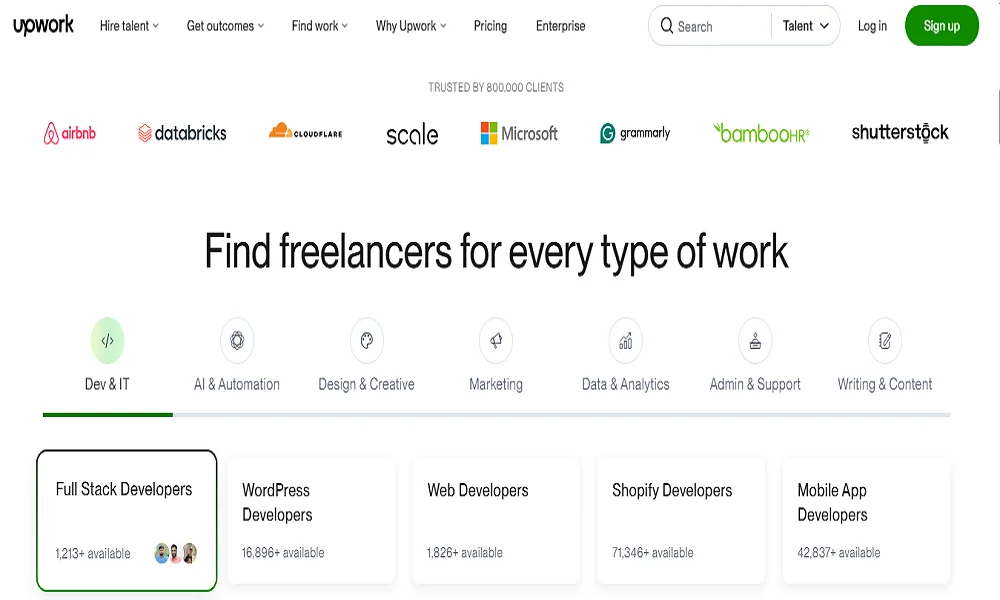
It is one of the biggest freelancing platforms, where businesses and agencies post projects and freelancers submit proposals based on their expertise. From web developers to presentation designers to blog writers, you’ll find thousands of freelance writing jobs in the UK. Create a professional website, upload your best samples, and apply for a suitable offer.
Website: upwork.com
2- Fiverr
Another familiar name in the freelancing world is Fiverr, which is equally popular worldwide. Freelancers create service listings, known as gigs, that potential clients can purchase. Your service description must be clear so people have a clear idea of what you are providing. For instance, ‘I will write SEO-friendly articles.;
Website: Fiverr
3- PeoplePerHour
It is the UK’s freelancing workplace where most freelancers are from the UK, but their reach is global. Content writing, SEO, web development, and voice-over are among the most popular categories, and businesses frequently post work opportunities. Submit proposals and find clients looking for your services.
Website: PeoplePerHour
4- LinkedIn
Build professional connections in the marketplace to find more potential clients. LinkedIn is the best place for this purpose. Create a profile that clearly explains your services and connect with agencies, website owners, and businesses.
Website: LinkedIn
5- Freelancer.co.uk
A large-scale marketplace for UK freelancers. You will be fairly paid and get reputable projects on this platform that is accessible to everyone. You get plenty of industry options to choose from.
Website: Freelancer.uk
7- Set Your Freelance Writing Rates
Beginners often have no clue how to set their freelancing rates and keep asking everyone. There is no fixed rate, as pricing depends on your skills and the services you provide. Common pricing methods include:
- Pay Per Word: This is one of the most common methods, and I used to get paid based on the number of words I wrote.
- Pay Per Article: You get paid a fixed amount per article. The word count doesn’t matter here, since the rate is already set.
- Pay Per Hour: You get paid for the time spent on research, writing and editing.
- Pay Per Month: You agree on a specific amount per month. You decide the number of articles and the daily hours at the beginning.
As a beginner, charging per word or per article is easy. Don’t compare yourself to other freelancers before setting your rates. Look at the project, the type of articles and the time it demands.
Essential Tools for Beginner Freelance Content Writers
You need a few tools to make your content worth applauding. Here are a few with free versions available.
- Google Docs: You can use it for writing and editing your article
- Grammarly: Use this tool to make your article grammar error-free. You can start with the free version, but it’s better to switch to the paid one once you start getting clients.
- Google Trends: A free tool for exploring topic interest. You can find out what people are most interested in.
- Google Search Console: A free tool that shows your website’s current performance. However, you don’t need it much if you have just started.
- Semrush or Ahrefs: The most-used tools for keyword research and competitor analysis. Their free versions are also available.
Here is a complete list of free SEO tools for beginners that might help you.
How Much Can You Earn as a Freelance Content Writer in the UK
There is no fixed rate for freelance content writing, as factors include your experience, niche, number of clients, writing quality, and hours spent. Beginners often start with small projects, while seniors and experts usually take on larger projects that require specialised content.
Here’s a rough breakdown of starting costs for freelance content writing.
| Experience Level | Typical Day Rate | Service |
| Juniors (0-3 years of experience) | £150 to £300 | 1 solid article comprising 800-1200 words or 2 or 3 short blogs |
| Mid-level (3-7 years of experience) | £300 to £450 | 1 well-researched long article comprising 1500-2500 words |
| Seniotrs/specialist | £450 to £800+ | 1 in-depth research article or strategic advisory work |
The rates are taken from a UK website, samssocialmediaclub.com. Instead of checking the industry’s rates, you must calculate the final rate yourself. The calculations must be done according to the following points:
- Choose a pricing model
- Consider your experience level
- Calculate the time required to complete an article
- The type of content you have to write
- How urgently you have to complete it
- Revisions and approval
How Much You Should Charge as a Freelance Content Writer UK
As a beginner, you may still be confused about what rates to set as a content writer. Yes, you should look at market rates, but don’t rely on them entirely. Some beginners start with small projects to build experience, while senior writers charge more for specialised content.
I suggest starting with small projects and gradually moving to bigger ones. For example, you complete 5 articles in a month and charge £50 for each one. In this case, your monthly revenue would be £250. Over time, increase your article count and start charging £80-£100, and your monthly revenue will increase.
However, £250 is gross revenue, not take-home income. Expenses and any applicable taxes still need to be considered. Keep in mind the UK tax rate that every citizen must pay if their earnings exceed a set limit. However, focus on your skills; keep improving your portfolio so more big names approach you.
Tax Rules for UK Freelance Content Writers
It doesn’t matter whether you are doing a side hustle as a hobby or just for fun; you can register for tax if your total side hustle earnings exceed £1,000. However, this limit applies only until April 2027. The tax-free trading allowance is increasing to £3,000, which is a big relief for people doing side hustles.
You can check their official website for further details, as they update it regularly.
Common Freelance Writing Rates Beginners Should Avoid
Here are a few common mistakes every beginner makes if they aren’t aware of them. Check these before starting your content writing hustle.
- Don’t write about something you are not confident about. Always choose a topic or subject you know well.
- Do not try to cover every niche. Choose 1 or 2 as a beginner, and stick with them until you’re a pro.
- Your portfolio plays a huge role in getting big clients. Don’t underestimate it.
- Don’t undervalue yourself even as a beginner. Many people charge less just to get work.
- Relying on a single freelance platform isn’t a wise decision. You have multiple options.
- Late submissions leave a bad impression. Be on time.
- Completely relying on AI tools without doing your own research is not correct. Use them only for editing or brainstorming. Do your own research first.
- Working without agreeing on payment terms is another of the biggest mistakes beginners make.
Frequently Asked Questions
How to become a freelance content writer with zero experience?
Start with the basics. Choose a niche you are interested in and write short blogs or articles about it. Keep improving your writing skills. Write 3 or 4 of your best articles and add them to your portfolio to show clients. Apply on platforms like Fiverr or Upwork.
Can I do freelance content writing from home?
Yes, one of the biggest advantages of freelance content writing is that it lets you work from anywhere. You need a laptop and a reliable internet connection to get started.
Do I need a degree to start freelance content writing?
No. You only need strong writing, research, and editing skills to succeed in this career.
What are the freelance content writing rates in the UK?
The average base salary, according to Payscale, is £24,326. However, it isn’t fixed, as several factors influence how much you can charge.
How to get content writing clients in the UK?
Some of the best platforms for finding opportunities include Upwork, Fiverr, PeoplePerHour, and LinkedIn. However, Upwork is the best of the bunch, and you should start there as a beginner.
Final Thoughts
Freelance content writing is one of the most rewarding side hustles if you enjoy research and writing. This guide explains how to start freelance content writing in the UK, including the best platforms to get your first client.
Don’t rush to start working. Develop your writing skills, practice as much as you can, build a strong portfolio, and youare ready to start. No heavy investment is required to begin with this side hustle. You need a laptop, an internet connection, and a few free tools to start your first-ever project.
If you want a flexible way to earn some side income as a mother or a student, freelance content writing is worth exploring.